Friday, February 23, 2007

H-II-A Flight 12

Going Strong


It's been a year since I was over in Japan to watch Flight 9 take off into the dark clouds. Roughly a year on, JAXA have launched Flight 12 successfully after some delays.
宇宙航空研究開発機構は24日午後1時40分すぎ、政府の情報収集衛星レーダー2号機と、光学3号機の実証機を載せたH2Aロケット12号機を、種子島宇宙センター(鹿児島県南種子町)から打ち上げた。ロケットは衛星2基を予定の軌道に放出し、打ち上げは成功した。

 情報収集衛星は光学とレーダーの2基1組で、既に光学1、2号機とレーダー1号機が打ち上げられている。内閣衛星情報センターによると、レーダー2号機が予定通り運用されれば、政府が目指す全4基の体制が整い、地球上のあらゆる地点を1日1回撮影できるという。

 現在の光学1、2号機は、地上の約1メートルのものを見分ける能力があるとされる。光学3号機では能力を50センチ程度に上げることを目指しており、実証機で機器の性能確認などをする。

 当初15日に打ち上げ予定だったが、落雷の恐れなどで3度延期されていた。

 開発費はレーダー2号機が約300億円、実証機が約115億円。
The rocket was launched at 1:40pm local time. It was carrying a double-payload of optical satellites no. 2 & 3. Both satellites got into orbit safely.
The development of the satellite is estimated at AUD$300Million, an No.3 itslf cost AUD$115Million.
And so it goes!

Thursday, February 22, 2007

Violent Chimps

Chimp Watch

I know lateley I've been slack and if anything, tend to gravitate ot chimp stories than space, but this is quite extraordinary.
Chimpanzees in Senegal have been observed making and using wooden spears to hunt other primates, according to a study in the journal Current Biology.
Researchers documented 22 cases of chimps fashioning tools to jab at smaller primates sheltering in cavities of hollow branches or tree trunks.

The report's authors, Jill Pruetz and Paco Bertolani, said the finding could have implications for human evolution.

Chimps had not been previously observed hunting other animals with tools.

Pruetz and Bertolani made the discovery at their research site in Fongoli, Senegal, between March 2005 and July 2006.

"There were hints that this behavior might occur, but it was one time at a different site," said Jill Pruetz, assistant professor of anthropology at Iowa State University, US.

"While in Senegal for the spring semester, I saw about 13 different hunting bouts. So it really is habitual."

Chimpanzees were observed jabbing the spears into hollow trunks or branches, over and over again. After the chimp removed the tool, it would frequently smell or lick it.

In the vast majority of cases, the chimps used the tools in the manner of a spear, not as probes. The researchers say they were using enough force to injure an animal that may have been hiding inside.
So much for the notion that humans are the only apes to use tools as weapons.

Tuesday, February 13, 2007

Hammer Of The Chimps

New Chimp Finds

It turns out that chimps might have learned tool use at least 4200 years, putting paid to the theory that only humans use tools. Here's the Article:
The research pushes back chimpanzee tool use thousands of years. It casts into doubt the long-standing theory that direct human ancestors were the only animals to independently develop tools—and that chimps learned to use stone tools by watching humans.

Instead both humans and chimps could have inherited the ability to crack nuts with rocks from a common ancestor, Julio Mercader of the University of Calgary in Canada and co-authors report in today's issue of the Proceedings of the National Academy of Sciences.

Or chimps may have developed the behavior on their own. In either case, it's no longer likely that chimps learned to use stones as tools only by imitating humans.

At 4,300 years old, the chimps' tools correspond to the late Stone Age of human history—before the advent of agriculture in West Africa.

"Until recently people used to say that among modern-day chimpanzees the behavior came from imitation of farmers," Mercader said. "That assumption is no longer valid. What we present predates the presence of farming."
Of course some animals do use tools. For instance Sea Otters use a flat rock to break open sea shells. Doesn't make them exactly 'sapient', though. :)

Wednesday, February 07, 2007

Space Sickness

Look Back And Ponder

The jokes about Capt. Nowak aside, the incident has brought about a hightenned interest in the psychological screening of astronauts. Space Sickness is the stuff of fiction; except there's always the spectre of cabin fever. After all, one could argue, not so much "how this came to pass", but more "why doesn't it happen more often?"
They are highly stresses professionals under immense scrutiny. It's amazing they don't sort of crack up more often.

The recent meltdown of captain Nowak has brought about this article, which I think is interesting.
The bizarre case of Lisa Marie Nowak, a Naval officer and NASA astronaut who was arrested on Monday and formally charged yesterday with attempted kidnapping and murder, continues to animate online discussions (including in our own forums). Much of the chatter centers on NASA’s psychological screening process, as well as the degree to which Ms. Nowak’s conduct falls under the jurisdiction of civilian authorities, Naval rules and NASA regulations.

At least a few people associated with the nation’s space program have emerged in news reports suggesting that psychological testing for astronauts is not quite up to snuff. The Associated Press quotes retired astronaut Jerry Linenger, for example, who suggested that NASA needed to review its psychological screening process:

With NASA talking about a 2 1/2-year trip to Mars, it would be dangerous for someone to “snap like this” during the mission, he said.

“An astronaut is probably the most studied human being by the time you go through your testing, your training,” Linenger said. “I think there’s still a lot of unknowns out there.”

No screening, of course, is foolproof. Writing more than a decade ago in New Scientist magazine, Ian Mundell noted the problems that Soviet cosmonauts have encountered during long term space flight. He includes a telling quote from Cosmonaut Valery Ryumin:

Cosmonaut Valery Ryumin wrote in his personal diary in 1980, “All the necessary conditions to perpetrate a murder are met by locking two men in a cabin of 18 by 20 feet … for two months.” As far as the Western world knows Soviet space missions never went that far, despite missions lasting more than a year in the 90 cubic meters of the Mir orbital station. And even that space became increasingly constricted because used equipment was stored inside, rather than ejected.

NASA itself, in exploring the risks associated with an extremely long manned flight to Mars, should it ever be undertaken, has noted on occasion that psychological and psychosocial issues crop up periodically — perhaps inevitably — among astronauts:
The bits in italics are quotes within quotes. You get the idea that spending time in a tin-can isn't exactly like relaxing in the lounge-like atmosphere of a Star Trek spaceship bridge or even the main section of the Millennium Falcon. People are going to get a form of cabin fever up there.

Thursday, January 25, 2007

Megafauna Find

Scary Pre-historic Monsters

There are lots of those that fit that moniker, but for the moment consider this: the most frightening, land mammalian carnivore may not have been the lion, but the marsupial lion.
The largest creatures to fall into the caves were giant wombats weighing about 200 kilograms and similar-sized giant kangaroos. This may have been the maximum size of creature that could fit down the small chimney holes.

From the pristine condition of the remains it is thought the holes must have been sealed for hundreds of thousands of years.

Nonetheless, the bones the scientists found were extremely fragile and had to be hardened using a chemical process before being wrapped and removed from the site in hard plastic cases.

All but one of the species of lizards that fell into the caves still scurry around the plain today.

Most of the small mammals - which included possums, dunnarts, antechinuses, bandicoots and bilbies - are also still alive, but do not all live on the now-denuded Nullarbor.

Two species of parrots were also found. This "suggests the presence of hollow-forming trees useful for nesting", Prideaux says.

Altogether, the remains of 11 marsupial lions, Thylacoleo carnifex, were found in the caves, which have been named the Thylacoleo Caves in their honour.

These 100-kilogram creatures were Australia's fiercest predators, with the most powerful bite of any known animal, including the sabre-toothed tiger, hyena and Tasmanian devil.
Interesting find. Let'ds call it a' landshark' instead... only kidding! :)

Monday, January 22, 2007

Fall Out

Here's the latest on the Chinese satellite-missile test.
Assistant Secretary of State Christopher Hill raised the issue with Chinese Foreign Ministry officials during a weekend visit to Beijing, State Department spokesman Sean McCormack told reporters in Washington.

Hill was told the Jan. 11 test was ``not meant as a threat against anybody and it's not meant to spark a race to militarize space,'' said McCormack, who urged China to be more ``transparent'' about its space program.

The U.S., U.K. and Australia raised concerns with China following the test and said debris from the destroyed satellite could be dangerous to other space installations. Japan called on the government in Beijing to explain its actions.

``We would encourage greater transparency as to exactly the specifics of this test, the intent behind it,'' said McCormack yesterday, according to a transcript. ``It has been a continuing topic for us as well as others in the region to encourage the Chinese to become more transparent in terms of their military spending and their military programs.''

U.S. officials have expressed concern that other countries may be acquiring capabilities to attack civilian and military space systems.
Well, presumably, they would. After all, who likes knowing that America is peeping in on them 24/7? It's th kind of capability that one would expect to be developed by somebody out there.

ISRO Space Capsule

Strange But True

Indian scientists are working on a return capsule.
Indian scientists for the first time have safely guided a space capsule back to Earth.
Indian space agency ISRO said the capsule splashed down in the Bay of Bengal. It added, efforts are underway to locate it and bring it ashore.

Scientists will see if all experiments have gone as planned and most importantly if the ceramic tiles served their purpose.

Only three other countries, Russia, America and China have mastered this complex technology.

It is seen as India's first steps towards undertaking a manned mission.
The 550 kg capsule was planned to land 140 km east off the coast of Sriharikota.

On splashdown, a giant balloon keeps it afloat, while a green dye and a homing beacon will help Coast Guard ships and scientists from ISRO locate the capsule.

The capsule re-orients and four tiny rockets on it will help de-boost it. Upon re-entry the capsule faces temperatures as high as 1200 degrees.

Three parachutes were planned to slow down its speed five km above sea level. Finally, when the capsule splashes down it travels at 36 km per hour.

The spindle shaped space capsule that was launched on top of the Polar Satellite Launch Vehicle or the PSLV is India's first attempt to see if orbiting objects can be safely brought back to earth.

The space capsule has been orbiting the earth at a height of 625 km.
When it re-enters the earth's atmosphere it will be traveling at over 28,000 km per hour.
There you go. It has in fact splashed down safely.
The Space Recovery Experiment-1 (SRE-1) splashed down in the waters of the Bay of Bengal at 9.45 a.m., about 140 km from where it had taken off into space at the Sriharikota launch station in Andhra Pradesh.

'Its speed at the time was about 40 km per hour, the speed of a car,' said an official of the Indian Space Research Organisation (ISRO), adding that it was located by a Coast Guard helicopter and recovery efforts were in full swing.
The satellite will be towed first to an area off the Ennore harbour, north of Chennai. The Coast Guard vessel will then slowly navigate northward to Sriharikota and reach the station by night.
The space industry just keeps on changing.

Saturday, January 20, 2007

Chinese Star Wars

Blowing Up Satellites
China managed to destroy a satellite with a medium ballistic missile. The immediate ramifications of that are obvious: they can knock out the aerospace intelligence capability of her enemies.
The satellite was some 500 miles (800km) above the earth.

At the very least, it represents the first significant escalation in the space weapons race in 20 years.

Only the United States and the former Soviet Union have previously destroyed targets in space and that was back in the 1980s.

Although this time China used a relatively old-fashioned ballistic missile to target the satellite, it is also thought to be working on far more sophisticated laser technology to do the job.

US officials have been alarmed by the test itself and the failure of China to announce what it was doing either publicly or privately.

A White House spokesman said the "development and testing of such weapons is inconsistent with the spirit of co-operation that both countries aspire to in the civil space area".

He said both the US and other countries were concerned.
Talk about setting cats amongst the pigeons.

Thursday, January 18, 2007

Space Elevator Rationale

Some Reasons Why We Should
Here's a link.
I think the argument that continuing our civilization's current carbon based energy regime cannot meet the environmental restrictions even if (and it is a big if) we can wring another few decades or a century out of it by using forms such as oil shale, tar sand etc (see Bjorn Lomborg on how that can be done). It is equally clear that while the dire predictions of the Club of Rome have not come true as predicted, we must sooner or later face sever shortages of minerals - raising the price of some of them beyond what our societies energy regime can afford - eventually threatening even out globalised society with collapse (as laid out by Jarred Diamond in his seminal work 'Collapse: How Societies choose to succeed or fail').

If our society did collapse, we would have to expect this to occur globally as our now world spanning economy and political structures fight it out for the resources they need to sustain themselves just the same way the chiefs did on Easter Island or the Aztec Nobles and Kings did in Central America. The trouble would be that with this occurring globally we could expect the collapse to be world wide as well and our heirs to be unable to rebuild a society like ours for many centuries (if ever) because we had already exploited all the easily recovered mineral resources and they would lack the technology or global organisation or both, to go after the scraps we leave them. The scraps we are increasingly turning to now ourselves (as recommended by Lomborg). We therefore should equate such a potential collapse with near extinction of our species (& many others) for planning purposes. I believe we must plan to avoid it at all costs.

So we have a knotty problem, or at least a major crisis of how our society works and collapse within 100 years is a very real possibility, however high on the hog we may seem to be riding as the West sees it. Part of the solution will surely be utilizing every 'alternative' clean energy source we can. Part or it will be new technologies to replace minerals we lack with alternatives and better extraction to go after reserves no-one would have touched previously but this only buys us time as we tighten our belts and still consume more of the geological legacy the Earths past has left us - and which can never be replenished (except over Millions of years) and which we therefore CANNOT use *sustainably*.

This of course leads us back to my original assertion that we need resources beyond those of the Earth in order not to face near extinction. We also need energy to be sufficiently environmentally clean (including greenhouse neutral) plentiful and affordable to run our ongoing civilization on it. This will be hard enough if we keep the high standard of living for the current developed West only but China and India are determined that that will not be how it goes.
I do recommend you read on.

Wednesday, January 17, 2007

5 Minutes To Midnight

The End Is Closer

Thanks to the efforts of Iran and North Korea, the world is closer to nuclear holocaust.
We stand at the brink of a second nuclear age. Not since the first atomic bombs were dropped on Hiroshima and Nagasaki has the world faced such perilous choices. North Korea’s recent test of a nuclear weapon, Iran’s nuclear ambitions, a renewed U.S. emphasis on the military utility of nuclear weapons, the failure to adequately secure nuclear materials, and the continued presence of some 26,000 nuclear weapons in the United States and Russia are symptomatic of a larger failure to solve the problems posed by the most destructive technology on Earth.

As in past deliberations, we have examined other human-made threats to civilization. We have concluded that the dangers posed by climate change are nearly as dire as those posed by nuclear weapons. The effects may be less dramatic in the short term than the destruction that could be wrought by nuclear explosions, but over the next three to four decades climate change could cause drastic harm to the habitats upon which human societies depend for survival.

This deteriorating state of global affairs leads the Board of Directors of the Bulletin of the Atomic Scientists — in consultation with a Board of Sponsors that includes 18 Nobel laureates — to move the minute hand of the “Doomsday Clock” from seven to five minutes to midnight.
Thank you Kim Jong-Il and Ahmedinejad.

Wednesday, December 20, 2006

Space Shuttle Coming Home

Discovery Readies For Re-Entry
Here's the article.
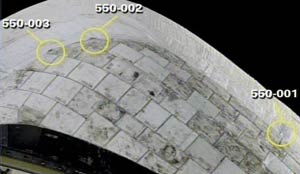
THE shuttle Discovery astronauts glided sensors over their ship's wings and nose yesterday, scouting for any heat shield problems before Friday's scheduled landing in Florida.
The survey was intended to find any damage from tiny meteoroids or space debris that may have occurred since the shuttle reached orbit on December 9. The astronauts inspected their ship once already to see if it made it through the launch without problems.

Both inspections stem from safety upgrades implemented after the 2003 Columbia disaster, which was triggered by a piece of foam insulation that fell off the shuttle's fuel tank during launch and hit the ship's wing.

Damage from the impact was so severe the shuttle broke apart as it flew through the atmosphere for landing 16 days later, killing all seven crew members.

Though Discovery showed no signs of damage from launch, NASA decided the final inspection was more important than preserving the standard two-day supply of cryogenic chemicals, which are used to make electricity, for any weather-related or technical problems that might postpone landing.

Discovery's mission had been slated to last 12 days, which would have left enough supplies for the two-day reserve, but was extended a day to retract a jammed solar wing panel on the International Space Station.

Discovery departed the space station on Tuesday after rewiring the orbiting outpost and adding a truss segment to its backbone.

With just one day's supply of liquid oxygen and liquid hydrogen in the tanks, Discovery is poised to return to Earth on Friday. NASA mobilized all three shuttle landing sites, including its rarely used New Mexico landing strip, to improve the chances of a homecoming on Friday.
Godspeed Discovery.

JAXA

HII-A Rocket

The HII-A Rockt Flight 11 was launched today carrying a payload of 5.8tonnes. It had 4 SRBA strap on booster rockets and cleared the 70m tower in twice the normal speed of 2seconds.
宇宙航空研究開発機構種子島宇宙センター(南種町)から18日に打ち上げられたH2Aロケット11号機。固体ロケットブースター(SRBA)を初めて4本装着した機体は、地鳴りのようなごう音と太い噴射雲を残して、冬の空に消えた。迫力を増した打ち上げの様子に、見学者たちは息をのんだ。

 H2Aは、打ち上げ時の加速に用いるSRBAと、固体補助ロケットを組み合わせ、打ち上げ能力を4段階で調整する。11号機が載せた技術試験衛星「きく8号」は、国内最重量の約5.8トン。SRBAを通常の2本から初めて4本に増やし、「最強型」にした。

 同機構によると、発射直後の初速度は通常の2倍。射場にある高さ約70メートルの避雷鉄塔を越える時間が6秒から3秒に短縮された。噴射の音や光量も増したという。

 通常はゆっくりと浮き上がるH2A。この日は、まるで空からつり上げられるようにスムーズに上昇した。打ち上げを見慣れた同機構の広報班員たちも「今回は違った」と興奮気味に話した。
The payload was 'Kiku 8', a communication satellite with two 19x17m antennae and should hit stationary orbit in 2weeks.


宇宙航空研究開発機構は18日午後3時32分、技術試験衛星「きく8号」を、種子島宇宙センター(鹿児島県)から国産主力ロケットH2Aの11号機で打ち上げた。

 きく8号はテニスコート一面ほどの縦19メートル、横17メートルという世界最大級の大型通信アンテナを2枚搭載しており、打ち上げ時の重さは日本で過去最大の約5.8トン。畳んであるアンテナを打ち上げ約1週間後にバネの力で広げ、その約2週間後に静止軌道に入る計画だ。災害時の状況把握などに役立てるため、地上の小型携帯端末と直接通信する実験などに取り組む。
More details can be found here.
Another successful launch by JAXA.

Tuesday, December 12, 2006

Shuttle Flight


The Space Shuttle is aloft once more and I've been busy following events in sport. So apologies.
Astronauts on board the space shuttle Discovery will attach an extension to the orbiting International Space Station during a spacewalk today, in what is said to be one of the most difficult tasks ever carried out in space.

Discovery, which docked last night local time, will remain at the ISS for eight days, during which its crew will perform three spacewalks.

In the first, Christer Fuglesang, a Stockholm physicist and the first Swede in space, along with Robert Curbeam, the mission specialist, will attach a two-tonne, $11 million cube-shaped addition to the space station.

During the subsequent spacewalks astronauts will rewire the US-made portion of the space station, which will involve cutting off the power and activating extra solar panels to double the current electrical output.

The National Aeronautics and Space Administration says it will be the trickiest manoeuvre ever carried out in space.

Meantime, Nasa was deciding whether there was any need for further inspection of the shuttle’s left wing after a sensor detected a "very low impact" less than three hours after docking.

Two astronauts had used a robotic arm to examine the wing leading edge. But John Shannon, chairman of the mission management team, said the impact was considered to be of concern but the agency wanted to play if safe.

"It looks like something happened," said Mr Shannon, adding that the wing looked fine during a focused inspection performed Sunday.
Since then they've had a spacewalk to confirm the shuttle was okay.
Two astronauts climbed out of a hatch on the international space station Tuesday, starting a difficult six-hour spacewalk during which they will guide and bolt into place a new 2-ton addition to the orbiting lab.

U.S. astronaut Robert Curbeam, a veteran spacewalker, and the European Space Agency's Christer Fuglesang, who is making his first spacewalk, stepped outside at 3:31 p.m. EST as the space station flew 220 miles over central Europe.

"I've got my head out the hatch," Curbeam radioed commander Mark Polansky.

Polansky, who flew on a 2001 shuttle mission during which Curbeam took three spacewalks, responded, "OK, Buddy. Welcome back. It has been a long time."

Right after the spacewalk began, a hand control unit was dislodged on Curbeam's backpack attachment used in case he becomes untethered, but the problem was quickly fixed. Spacewalkers are tethered at all times.
So all is well.

Monday, December 04, 2006

Back to the Moon

Budget Considerations
Here's an article about the projected budget of the missions back to the moon.
Some government auditors worry that NASA could come up billions of dollars short of the money needed to return U.S. astronauts to the moon.

However, the space agency says it already is closing that long-term funding gap by making money-saving design changes to its proposed Orion spaceships and the Ares rockets that will launch them.

Those and other changes made since NASA first estimated the cost of going back to the moon are making people inside the agency more confident they can complete the project on time and within its budget. Today, NASA plans to reveal details about what astronauts will do on the moon and how they will do it.

However, congressional auditors fear that NASA is repeating mistakes made in development of the space shuttle, International Space Station and several failed shuttle replacement programs and could be on track to run up billions of dollars worth of cost overruns. The Government Accountability Office is asking NASA to slow its investment of taxpayer dollars in the project.

Scott "Doc" Horowitz, NASA's man in charge of the moon-landing project, said the agency is pressing ahead because it has solid engineering and cost information for a project that involves development of spaceships and rockets using designs and components with a long track record of proven success.

NASA is keenly aware that failure to bring the project to fruition safely, on time and within budget could threaten the agency's future, he said.

"NASA needs to improve on its credibility," Horowitz said in a wide-ranging interview with FLORIDA TODAY on the challenges facing the moon-landing project. "It's been a while since we've been able to execute a program like this. The best way to improve credibility is to execute. We need to prove it."
Ah, the normal pressures of project management!

Sunday, December 03, 2006

The World Is Not Enough

Stephen Hawking Says...


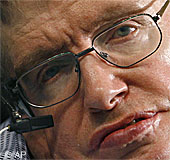
Stephen Hawking has been making this stance in public for some months now. At a time where our public interest in space might be on the wane, he sets us the bar.
Stephen Hawking, one of the world's most venerated scientific minds, has said abandoning terra firma is inevitable since a nuclear war or some sort of asteroid collision could at some point wipe Earth off the chart as a viable place to live.

"The long-term survival of the human race is at risk as long as it is confined to a single planet," the usually publicity-shy Hawking told BBC radio.

Incidentally, if humans have any hope of reaching hospitable planets in other solar systems using the rocket technology that took us to the moon, it'll take, oh, around 50,000 years.

But the wheelchair-bound Cambridge University professor has a way around that: propulsion systems, a la Star Trek. "Science fiction has developed the idea of warp drive, which takes you instantly to your destination," he said.

Though it's scientifically impossible for anything to travel faster than the speed of light, Hawking believes people could eventually go just under that speed using a process known as called matter-antimatter annihilation.

Star Trek aficionados will be well aware that ships such as the Enterprise are propelled using antimatter, a process which is still unworkable in reality though has for years been investigated by NASA's Marshall Space Flight Center.

Were the method indeed possible, travelers could conceivably reach the closest star in around six years.

It might be decades before today's would-be space travelers get to visit such planets, though Hawking, for one, is still keen to visit the final frontier. "My next goal is to go into space," he said. "Maybe Richard Branson will help me."
It's no laughing matter, it's not science fiction, it's Stephen Hawking saying his piece. The future of humanity lies in space.

Thursday, November 16, 2006

There's DNA in 'Neanderthal'

Unravelling A Mystery


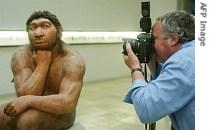
Scientists have managed to sequence a partial draft of the genetic code of the Neanderthals. They had 99.5% to almost 99.9% of their coding in common with modern humanity. That's a pretty significant find.
The achievement demonstrates the feasibility of determining the entire genetic makeup of Neanderthals, as well as other extinct species, using DNA from fossils, the researchers said. The draft includes less than 1 percent of the DNA from a 38,000-year-old Neanderthal fossil, but the researchers said they expect to have a complete draft in two years.

An analysis of the partial DNA code shows that Neanderthals separated from the human line about half a million years ago, according to the team of German and American scientists. The team said it found no evidence to support a controversial theory that Neanderthals and ancient humans mated.

But the greatest significance of the announcement, other researchers said, is that it shows that the science of ancient genomics -- once solely the stuff of fiction like "Jurassic Park" -- has arrived. A genetic understanding of the Neanderthals, who made sophisticated tools and buried their dead, could reveal details like the color of their hair and perhaps whether they could speak. And it would allow researchers to identify the final, crucial genetic changes, long after the split with chimpanzees, that set humans apart and allowed their ancestors to prosper while Neanderthals died out.

"It is an amazing thing to be able to reconstruct the genome of an ancient organism," said David Reich , a genetics specialist at Harvard Medical School who was not involved in the research. "What they have done is an incredibly important technical achievement."
The research, published jointly by the journals Nature and Science, is also a testament to teamwork and sheer persistence. The scientists painstakingly examined some 70 Neanderthal bones in various collections before finding one -- recovered by paleontologists in a Croatian cave -- without too much contamination and with enough viable DNA.
Read on to find out how they got this DNA data.

Wednesday, November 08, 2006

Robodog

A Little Spooky
Here's something from the mailbox. Do check out this article.
BigDog is the alpha male of the Boston Dynamics family of robots. It is a quadruped robot that walks, runs, and climbs on rough terrain and carries heavy loads. BigDog is powered by a gasoline engine that drives a hydraulic actuation system. BigDog's legs are articulated like an animal’s, and have compliant elements that absorb shock and recycle energy from one step to the next. BigDog is the size of a large dog or small mule, measuring 1 meter long, 0.7 meters tall and 75 kg weight.

BigDog has an on-board computer that controls locomotion, servos the legs and handles a wide variety of sensors. BigDog’s control system manages the dynamics of its behavior to keep it balanced, steer, navigate, and regulate energetics as conditions vary. Sensors for locomotion include joint position, joint force, ground contact, ground load, a laser gyroscope, and a stereo vision system. Other sensors focus on the internal state of BigDog, monitoring the hydraulic pressure, oil temperature, engine temperature, rpm, battery charge and others.

So far, BigDog has trotted at 3.3 mph, climbed a 35 degree slope and carried a 120 lb load.
A long way yet to a fully combat-ready space robot of Science Fiction, but it's pretty neat all the same. :)

Friday, October 27, 2006

Sorry

I've Been Lazy
It's a terrible thing when you're trying to give up coffee that one gets really indolent and unmotivated. Plus there's been the debacle of October baseball for me and the whole thing has added up to zero posts here.

I'll try and keep abreast of stuff as soon as I get my head in gear.
Apologies!

Thursday, September 21, 2006

Back To Earth, Back To Work

Atlantis Lands
No, I'm not talking about the Red Sox. I'm talking about the Space Shuttle Program which is now rebuilding the momentum it lost in the aftermath ofthe Columbia disaster. Next on the agenda are lifting the components of ISS supplied by the Europeans and the Japanese that have been sitting around in storage.

Here's the latest.
"It's obvious to me that we are rebuilding the kind of momentum that we have had in the past and that we need if we are going to finish the space station," said NASA Administrator Michael Griffin during a postlanding briefing. "We have an awesome task ahead of us.... I think we're going to make it."

That's an assessment that undoubtedly brings a smile to the project's international partners.

"International partners, especially the Japanese and Germans, were crossing their fingers, hoping this mission would pan out," says Ray Williamson, with George Washington University's Space Policy Institute. "If NASA is successful at getting the space station completed, you'll see a lot more openness in Europe and Japan to collaborate with the US in new exploration efforts."

For December's mission, spacewalking astronauts are set to perform tasks that initiate the most complicated phase of station construction, mission planners say. In addition to delivering another truss segment, Discovery's crew will overhaul the electrical wiring and cooling-system plumbing to all of the major US components.

"It would be the equivalent to changing who delivers the electricity and water to your house - not just changing the source, but changing the wires and the pipes coming into the house and being routed around and under the house. It's that significant a change," says Paul Hill, a NASA flight director. "And it's all going to be done outside."

Then come the missions of 2007, during which the shuttle will drop off more basic- infrastructure components. To install them in their permanent locations, space-station crew members will use the station's robotic arm and conduct spacewalks to move existing elements in two high-stakes, slow-motion games of musical modules. At one point, they will have to disable and move the only connector, or node, capable of mating with the space shuttle - critical for resupply and crew exchanges, as well as construction.

If astronauts damage that connector, "the contingency scenarios get kind of ugly," Mr. Hill says. Between December's wiring and plumbing job and the station crew's segment shuffles, the next 12 months will see NASA undertake "the three most complicated things we're going to do in the entire construction of the space station."
It's all smooth-sailing for now.

Lucy's Child

...so to speak. They've dug up a very interesting hominid fossil.
In a discovery sure to fuel an old debate about our evolutionary history, scientists have found a remarkably complete skeleton of a 3-year-old female from the ape-man species represented by "Lucy."

The remains found in Africa are 3.3 million years old, making this the oldest known skeleton of such a youthful human ancestor.

"It's a pretty unbelievable discovery... It's sensational," said Will Harcourt-Smith, a researcher at the American Museum of Natural History in New York who wasn't involved in the find. "It provides you with a wealth of information."

For one thing, it gives new evidence for a contentious feud about whether this species, which walked upright, also climbed and moved through trees easily.

The species is Australopithecus afarensis, which lived in Africa between about 4 million and 3 million years ago. The most famous afarensis is Lucy, discovered in Ethiopia in 1974, a creature that lived about 100,000 years after the newfound specimen.

The new find is reported in Thursday's issue of the journal Nature by Zeresenay Alemseged of the Max Planck Institute for Evolutionary Anthropology in Leipzig, Germany; Fred Spoor, professor of evolutionary anatomy at University College London, and others.
Interesting news for those of us interested in early hominids.

Tuesday, September 19, 2006

Atlantis Is Coming Home

The New Routine
The new routine is to check damages to the heat shield. Atlantis has spearated from the ISS and is coming home.
Cape Canaveral, Florida - Atlantis' astronauts gave the ship's wings and nose one last inspection on Monday with a remotely operated TV camera and laser, and Nasa said there appeared to be no damage that would prevent the shuttle from coming home.

Atlantis and its six crew members are set to touch down early on Wednesday at the Kennedy Space Centre after 11 days in space delivering a major addition to the International Space Station and conducting three spacewalks to install it.

The astronauts attached a 15-metre boom to the shuttle's robotic arm to inspect for any damage. The boom has a TV camera and a laser imagery system attached to its end. An identical survey was conducted on Day 2 of the mission.

Monday's inspection was conducted while the shuttle was about 80 kilometres from the space station.

If the astronauts had found the type of damage that could cause a deadly accident, the shuttle would have been able to return to the station. However, the space station had its own problems on Monday.

Space station crew members pulled an alarm and donned protective gear after smelling a foul odour that turned out to be burning rubber and a harmful chemical leaking from an oxygen system.
It all looks well.