Howdy folks,
For those who don't know me, I'm James, I used to post on the old SpaceFreaks weblog and spark vicious flame wars with DDB. Art's told me I can post stuff that interests me to this blog.
Chris McMahon has said that war is a process of sacrificing the soldiers that fight it, a human sacrifice rather than self sacrifice. I think that makes a lot of sense.
The fact is that people who fight and die in war are negatively motivated (to use psycho-analytical language), they are avoiding something rather than trying to achieve something. They are avoiding "letting their mates down", they are avoiding disobedience, and in many wars they were avoiding the execution that was the punishment for "cowardice". The society that sponsors them puts them in a situation where the only way to avoid these things is to fight.
Here is an interview with the widow of the only Australian serviceman to die in Iraq, Flight Lieutenant Paul Pardoel. Apparently he wasn't a believer in the cause he was fighting for. I post this because I think that when Anzac day comes around, maybe we shouldn't talk about the sacrifices made by our servicemen, maybe we should instead talk about how our country or society has sacrificed them.
James
Tuesday, November 29, 2005

Wednesday, November 23, 2005
Today's Gossip
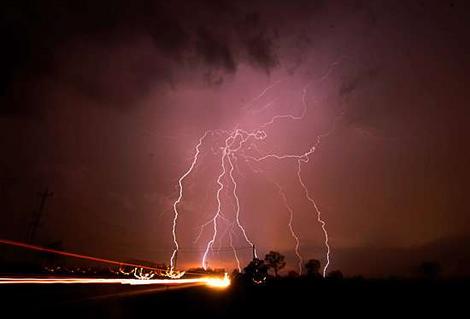
The above pickie is from the SMH; it's from the electrical storm that hit Sydney last night. Pretty nice shot.
The Falcon Hasn't Landed
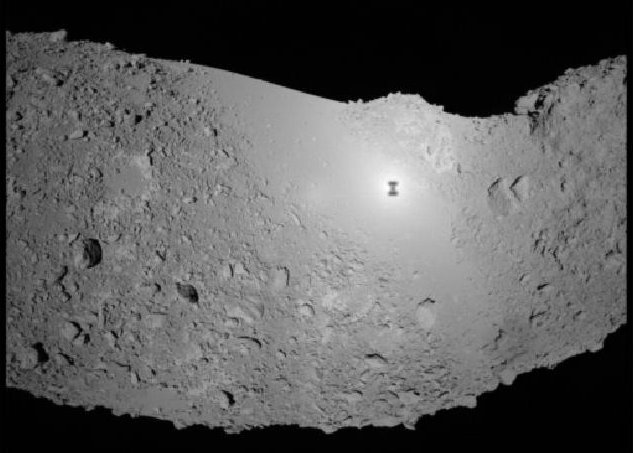
JAXA's Hayabusa probe sent out to land on an asteroid has missed its mark. It did manage to deliver a marker.
Hayabusa – which means "falcon" in Japanese -- is the Japan Aerospace Exploration Agency's $170-million-dollar mission to the near Earth asteroid named after the "father" of Japan's space program, Hideo Itokawa. It is, in fact, the world's first mission to attempt to land on an asteroid, collect samples, and return them to Earth. The spacecraft – which was developed at the Institute of Space and Astronautical Science (ISAS), a space science research division of JAXA -- launched from Japan’s Kagoshima Space Center on May 9, 2003 and arrived in September of this year.
The scientists and engineers in the Hayabusa mission control room lost contact with Hayabusa between 6 a.m. and 9 a.m., Sunday morning Japan Standard Time (JST), November 20, and so did not immediately realize what happened. People tuning into the mission via JAXA’s “live” website waited through the hours of silence.
After analyzing the data returned by the spacecraft, however, the team found that Hayabusa continued its slow descent following the target marker until it got to within about 10 meters (32.8 feet) of the big rock, and then it autonomously went into safe mode, according to a report issued by the Hayabusa Joint Science Team members that the mission’s Project Manager, Jun'ichiro Kawaguchi, sent to The Planetary Society yesterday afternoon. Instead of landing, the spacecraft apparently cruised above the surface for awhile, until mission control signaled to the spacecraft to abort the landing altogether.
While Hayabusa did not succeed in seizing a sample yesterday, the release of the target marker and its safe landing on Itokawa was a significant accomplishment. JAXA's Yasunori Matogawa, and Kawaguchi, of ISAS, announced the news at a press conference held Sunday afternoon around 4 p.m. JST at ISAS headquarters in Sagamihara City, Kanagawa Prefecture, about 40 kilometers (25 miles) west of Tokyo.
The spacecraft, they said, released the target marker when it descended to an altitude of about 40 meters (131 feet) above the asteroid, and at 5:46 a.m., Sunday, November 20 (JST) JAXA received the signal that Hayabusa had carried out its task successfully. This particular target marker carried special cargo – an aluminum sheet bearing 880,000 signatures gathered by The Planetary Society of Japan from people around the world – and delivered it to the surface. Moving at a velocity of 10 centimeters (about four inches) a second, the target marker landed about six and a half minutes after it left Hayabusa, settling down just as planned in the nice flat region that the team dubbed Muses Sea (after the original generic name of the spacecraft MUSES-C).
Since signals take around 17 minutes to get from Earth to Hayabusa, the spacecraft was on its own once it began to carry out the series of commands for Sunday's attempted touch-down. Its autonomous navigation relies on the Optical Navigation Camera and Light Detection and Ranging (ONC/LD&R) instrument, which measures the distance to and the shapes of the asteroid surface.
Hayabusa continued to descend toward the surface, "and successfully changed its attitude control to terrain alignment autonomous control using Laser Range Finder," according to the Hayabusa team’s report. If everything had gone as planned, the spacecraft would have continued on to a "soft" landing, touching down on the surface just long enough for its sample collector to reach out and seize just one gram of top soil, and then return to its home orbit around 7 kilometers out.
When Hayabusa descended to below 17 meters (55.7 feet), it stopped firing its engines and started into a freefall descent to the surface, according to the team's report. "We were watching it via Doppler," they wrote. "But no touch-down occurred for surprisingly 30 minutes, during which the descent continued at very slow speed of about 2 centimeters [.78 inch] per second. We estimate Hayabusa drifted at very low altitude along the surface. Therefore, Hayabusa did not touch down [on] the surface, but reached approximately below 10 meters [32.8 feet].”
Hayabusa cruised above the surface long enough for part of it at least to heat up to around 100 degrees Celsius (212 degrees Fahrenheit), according to Kawaguchi. Concerned about the temperature, the team sent up a command to Hayabusa to fly away quickly. "We directed a command to Hayabusa to make an abort, since the sub-spacecraft point might have shifted so much from the intended [landing] area," according to the report. Hayabusa heeded the command and rose to about 100 kilometers (about 62 miles).
The team is not yet exactly sure why Hayabusa fell into safe mode, but they believe it is because of an "attitude anomaly" that occurred close to the altitude of about 10 meters or so. It may be because Hayabusa failed to keep its attitude right just before touch-down and autonomously decided to put itself into safe mode in order to save fuel. Kawaguchi described this event "un-understadable," but said that "the details are under investigation."
Meanwhile the team's recovery of Hayabusa was performed successfully, Kawaguchi said, and the team will be testing the instruments to make sure each is still in good working order.
The fact that Hayabusa did not succeed the first time it tried to swoop down and grab its prey came as little surprise to most who have been following the mission – not because Japan is a fledgling country in space exploration, but because what they're trying to do, rather have the spacecraft do autonomously, from 180 million miles away, is incredibly complex, with each and maneuver involving myriad elements that all have to be working in sync. Hayabusa is as ambitious a mission as they come – and from a country young in space exploration – it probably would have been considered a miracle if it had succeeded in every objective.
During the two and a half years since it launched, Hayabusa has encountered more than its fair share of trouble, not the least of which were several life-threatening solar flares encountered en route to Itokawa. Then, on July 31 of this year, shortly before Hayabusa's arrival at the asteroid, the X-axis wheel, one of three reaction wheels onboard that control the spacecraft's orientation and are used to point instruments, antennas, or subsystems at chosen targets, just stopped. The spacecraft was designed to function just fine with the two remaining reaction wheels, Kawaguchi told The Planetary Society in an interview in September, it was able to resume attitude stability and the spacecraft had been operating normally since. Since the JAXA spacecraft arrived at Itokawa last September, however, Hayabusa has suffered the loss of a second reaction wheel.
A couple of weeks ago, Hayabusa released its tiny lander, Minerva, at the wrong time, sending the tiny, coffee-can sized robot floating off into space, instead of hopping around the asteroid for up to 36 hours taking pictures and collecting temperature data as was the plan.
Now the obstacles are looming large for Hayabusa as it enters what must be the final days of its mission at the small asteroid, which measures just 549 meters (1,800 feet long) by 180 meters (590 feet) wide. Although Kawaguchi told The Planetary Society earlier that the mission could probably succeed with only one reaction wheel if it came to that, there is now concern now about whether or not the asteroid explorer can continue to keep the attitude needed in order for Hayabusa to successfully snatch a sample due.
Meanwhile, Hayabusa is also racing the clock. The countdown to return to Earth is on, for the spacecraft needs to propel itself away from Itokawa by early December in order to place itself in the right trajectory to reach Earth. But there is a lot of hope and confidence remaining amongst the team members, and Hayabusa may swoop down and try again as early as next Friday, November 25.
"The project looks positively at the next opportunity, since almost every difficult step was now identified to function normally," the team stated in its report. This time, they noted, "the guidance and navigation to the intended point was performed quite well with the residual speed of almost several millimeters per second, that is the walking speed of worms."
One sample returned safely to the Australian outback in June 2007 is all it would take for this intrepid group to rightfully claim full mission success. Still, Hayabusa has already contributed reams of new data about asteroids like Itokawa, as well as data on ion propulsion and other technologies created by the Japanese especially for sample return missions. At the press conference, Matogawa evaluated the Hayabusa mission so far as the great success that will open "a new gateway" to Japan's space exploration.
"This is an incredible adventure unfolding at the asteroid -- and the sheer boldness of the attempt with the care obviously being taken in carrying it out is breathtaking," said Planetary Society Executive Director Louis D. Friedman. "We are on the edge of seats, with admiration and suspense, hoping it will work out."
So there we have it.
UPDATE
Hayabusa it seems did manage to land
TOKYO, Japan (Reuters) -- A Japanese space probe apparently succeeded in landing Saturday on an asteroid and collecting surface samples in an unprecedented mission to bring the extraterrestrial material back to Earth, but afterwards showed signs of trouble, Japan's space agency said.
The probe, now hovering about 5 kilometers (3.1 miles) from the asteroid, appeared to be shaking vertically due to problems with its thruster, according to spokesman Atsushi Akoh of Japan's space agency JAXA.
The agency would put the probe into "safety mode" to investigate, Akoh said.
The Hayabusa appeared to have touched down for a few seconds on the asteroid -- floating 290 million kilometers (180 million miles) from Earth -- to collect powder from its surface before lifting off again to transmit data to mission controllers, according to spokesman Kiyotaka Yashiro of Japan's space agency, JAXA.
More data confirming the mission's success is expected later in the day after scientists have examined additional transmissions from the probe, Yashiro said.
But JAXA will not know for sure if Hayabusa collected surface samples until it returns to Earth. It is expected to land in the Australian Outback in June 2007.
If all goes well, it will be the first time a probe returns to Earth with samples from an asteroid, according to JAXA. A NASA probe collected data for two weeks from the asteroid Eros in 2001, but did not return with samples.
Saturday's landing on the asteroid was Hayabusa's second, following a faulty touchdown Sunday. JAXA lost contact with the probe during that attempt and did not even realize it had landed until days later -- long after Hayabusa had lifted off into orbit.
The space agency hopes that examining asteroid samples will help unlock the secrets of how celestial bodies formed, because their surfaces are believed to have remained relatively unchanged over the eons, unlike larger bodies such the planets or moons.
Hayabusa fired a metal projectile shortly before 8 a.m. Japan time (11 p.m. GMT), suggesting that the asteroid had landed and collected the dust that was kicked up. The whole procedure was over in a matter of seconds, as planned.
"It is only a very small amount of material, powder really," Yashiro said.
It works, it works!
Crack Foam
NASA is stil stumped about the cracked foam.
SPACE CENTER, Houston -- NASA investigators looking into what caused large pieces of foam to break free from the Columbia and Discovery have found nine small cracks in the foam of an external fuel tank.
But program administrators are not sure whether the cracks played any role in the foam separation from the space shuttles.
"Certainly, the cracks we found ... are interesting," said John Chapman, who is responsible for the production of NASA's external tanks. "We're still in the process of understanding what that means."
So more shuttle problems to deal with for NASA. has anybody noticed the problems always seem to get piled higher and deeper and the thing always gets delayed?
Saturday, November 19, 2005
Space Station Move Lifeboat
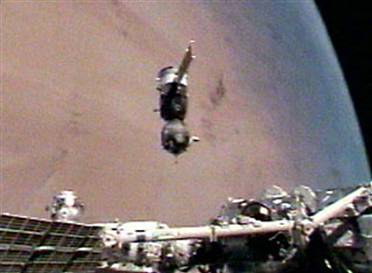
The soyuz casule was moved in preparation of an upcoming moonwalk.
MOSCOW - The two men living in orbit on board the international space station moved their Soyuz spacecraft on Friday to clear a dock for a planned spacewalk, Moscow mission control said.
Russia’s Valery Tokarev piloted the Soyuz to the Zarya cargo module on a quick 19-minute cruise that freed up the Pirs dock, which serves as an air lock.
Tokarev and NASA astronaut Bill McArthur arrived at the station in October and conducted the first spacewalk of their six-month orbital stint earlier this month from the U.S.-built Quest air lock. For their second spacewalk, the two will don Russian-made spacesuits and exit through the Pirs hatch.
It's from MSNBC.
Wowsers And More Porn Warnings
Your kid's iPod might have porn on it.
But users can also download graphic adult movie clips to the devices, meaning children could potentially watch whatever they want, whenever they want -- away from adult supervision.
Det. Ian Lamond of the Toronto Police Services Child Exploitation Unit told CTV News he believes some schools may eventually ban photo cellphones and iPods from school property.
"Technology is a great thing but it also makes everything bad, worse," Lamond said. "So anything that anyone wants to do illegally with an iPod or any other storage device can do that quite easily."
Technology expert Kris Abel said many parents believe their own safeguards on home computers are enough to protect their children.
But with Internet sites giving step by step easy instructions on how to put porn on your portable storage player, home computer safety programs might not be enough.
Abel said it's as simple as using one connecting wire to download adult images and kids can share questionable material with their friends.
Oh lord, no. May be they'll discover the dirty little secret called 'sex'. :)
Today;s Quick Shot At the ID-iots
This was in the Washington Post. I've seen the Kreuthammer name before in Time. It's eloquently put:
Let's be clear. Intelligent design may be interesting as theology, but as science it is a fraud. It is a self-enclosed, tautological "theory" whose only holding is that when there are gaps in some area of scientific knowledge -- in this case, evolution -- they are to be filled by God. It is a "theory" that admits that evolution and natural selection explain such things as the development of drug resistance in bacteria and other such evolutionary changes within species but also says that every once in a while God steps into this world of constant and accumulating change and says, "I think I'll make me a lemur today." A "theory" that violates the most basic requirement of anything pretending to be science -- that it be empirically disprovable. How does one empirically disprove the proposition that God was behind the lemur, or evolution -- or behind the motion of the tides or the "strong force" that holds the atom together?
In order to justify the farce that intelligent design is science, Kansas had to corrupt the very definition of science, dropping the phrase " natural explanations for what we observe in the world around us," thus unmistakably implying -- by fiat of definition, no less -- that the supernatural is an integral part of science. This is an insult both to religion and science.
We know this, but it's nice to knoww a commentator put it so clearly.
Thursday, November 17, 2005
NASA's Plans According To Griffin

A Vision Statement Of Sorts
NASA Boss Michael Griffin is saying there's between a 3 to 5 billion dollar shortfall to doing the rest of the 19 scheduled shuttle launches. It sounds like laying the ground work to retring the fleet, but that's just my speculation; he denies it in the Q&A section by saying he doesn't want to lose those people by simply cancelling the programme. Now, that's a kind of doublespeak is it not?
In the mean time he's telling us the international community is gung-ho about kicking on to the moon, Mars and beyond.
"The partnership has proven stronger than the stresses and strains which have been imposed on it, which have been great," Griffin said. "It has held together. If the United States is able to keep the commitments we've made to the station partners, I think we can take that partnership to the moon."
The ISS partners endured the grounding of the shuttles after the Columbia accident, cancellation of station components because of money and time limits, and the reshaping of U.S. space policy toward missions to the moon and Mars. Still, Griffin said his initial meetings with his counterparts from Russia, Canada, Europe and Japan only give him hope for future world space coalitions.
"Every time I speak to one of our international partners, they are gung-ho in every possible way about wanting to take this partnership forged on the space station to the moon and Mars. They want to do that," Griffin said.
The NASA boss spent a whirlwind day on the Space Coast. He met with workers at Kennedy Space Center and spoke to several hundred space-industry leaders gathered at the Florida Space 2005 conference. Then, he spent an hour answering questions about the space program's challenges and goals with Florida Today reporters and editors.
Hamstrung somewhat by requirements that he not disclose internal Bush Administration discussions about the 2007 budget, Griffin tried to quell lingering worries that even more shuttle flights might have to be cut to balance the budget later this decade.
Griffin said the agency has pitched several alternatives to the White House, which is preparing the next federal budget. Internal memos obtained by Florida Today indicate one option under review is slowing shuttle processing to one shift, working on one mission at a time and creating savings through the elimination of what could be thousands of jobs.
"It would be no secret to you that whatever area we decide to do less of would have its supporters who would be very upset by that, as would Florida if we decided to do less shuttle," Griffin said. "So, we are working to find every bit of fiscal synergy that we can so we can do what we want to do and we do not have to sacrifice what are valuable programs."
For now, he said, the agency plans 18 missions to the station and one flight to service the Hubble Space Telescope. Griffin acknowledged NASA must cut its bills because those flights will cost at least $3 billion more through 2010 than projected in the current federal spending plan.
There's also a Q&A at the bottom which is interesting.
Question: On why it's a bad idea to cut spending on space exploration to pay for short-term problems:
Answer: "Seven-tenths of 1% of the national budget is not a large figure, and even I don't argue that it should be a large figure. These are long-term investments, but there's a huge difference between seven-tenths of 1% and nothing. We need to invest the small fraction that we do invest in these long-term, high-payoff enterprises because that is what makes America great. There has to be something beyond our current problems because there are always current problems."
Q: On his previously quoted comments that the space shuttle and space station programs were "mistakes":
A: "The United States needs to be a space-faring nation. It needs to be able to operate in low Earth orbit and beyond. We had the moon, and we gave it up. That was a mistake. That's what I'm talking about ... So it absolutely was not that the shuttle was a mistake."
Q: On the loss of foam insulation during the launch of Discovery:
A: "We were largely successful (at solving the foam problem). We clearly need to get it right this next time because, if we don't, we are in danger of losing the confidence of our White House and Congressional stakeholders."
Q: On whether the agency will push to build its next spaceship and rockets here:
A: "No. NASA is not going to tell private contractors to move their factories from the state where the winner happens to reside ... to Florida. We launch from Florida. We'll integrate the launch vehicles and payloads here in Florida because it makes technical sense to do that. If the state of Florida wishes to make whatever contractor wins whatever job a better offer than the state he is in, have at it, but NASA is not going to interfere in that."
Q: On why it's a bad idea to cancel the shuttle program early:
A: "It would be a mistake to bring the shuttle program to a halt. It would be a mistake to send all of the people home and then some years later ask them to come back to work on the new system. We would not get those people back. We would lose an enormous base of essential experience that we would have to recreate. We're not going to need every single person presently working on the shuttle working on the new system. If we did, then the new system would be as expensive as the old one and no one will be happy. What we need to do is take some of the people working on the shuttle today and let them do other things so we can do more."
Q: On what the nation might learn on Mars that's worth the investment:
A: "What was there about the New World that would have been important in the year 1500 to Europeans who were perfectly happy with the lifestyle they enjoyed at that time? There were hundreds of years of investment by the Old World in the New World before it finally paid off. There are lessons there in terms of keeping commitments and strategic investments vs. worrying every year about hurricanes."
Q: On the cost of the plan to send humans back to the moon and on to Mars:
A: "We are talking about using the money already allocated to NASA on different things."
Notably, the answer he gives to the question of Mars is the 'Zubrin' answer.
He's Dead, Jim, But Not As We Know It
They're sending the ashes of dead actor James Doohan (a.k.a. 'Scotty From Star Trek") into space but the launch has been delayed.
The Falcon One was slated to take James Doohan’s ashes into orbit as per last request of the 85-year-old actor, but the launch was scrubbed after engineers found something amiss in a test fire of the rocket. No details were supplied, though it’s probably something to do with those dilithium crystals or Klingon sabateurs.
Doohan’s ashy remains are now scheduled to go into orbit sometime in January.
He rests in peace, shoot to kill, shoot to kill...
Tuesday, November 15, 2005
Darwin's Legacy To Australia Was A...
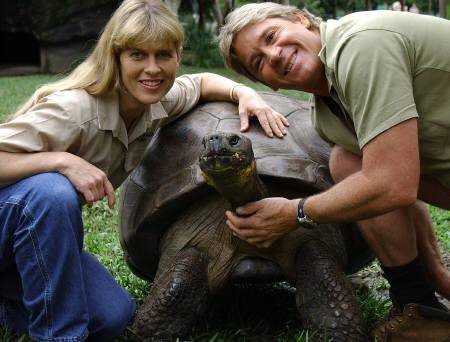
Tortoise
Harriet the tortoise, allegedly was brought to Ausstralia by Charles Darwin himself. This is the Reuters report:
CANBERRA (Reuters) - One of the world's oldest living animals, Harriet the tortoise, celebrated her 175th birthday on Tuesday -- with a pink hibiscus flower cake at her retirement home in northern Australia.
Australia Zoo, where Harriet has spent the past 17 years, says the Giant Galapagos Land Tortoise was collected by British scientist Charles Darwin in 1835, although some historians have disputed this.
There is no doubt however over the age of Harriet -- who for more than a century was thought to be a male and named Harry -- and she is recognized by Guinness World Records as the world's oldest living chelonian, or reptile with a shell of bony plates.
"She would definitely be the oldest living animal on Earth ... I can't see why she shouldn't live till 200," Australian conservationist and television celebrity Steve Irwin, who owns Australia Zoo north of the city of Brisbane, told Guinness World Records.
It's a rare animal that can claim to have worked with both Charles Darwin and Steve Erwin.
Saturday, November 12, 2005
Stopping 'IDiocy'
The New York Times' Take on the win in Dover, Pa.:
Well at least the sensible people won for aq change.
I also mis-reported Kansas. Kansas school board has re-introduced Creationismm yet again, confirming that once a redneck, always a redneck. I don't know why they try to portray this as a 'cultural war'. I think it's more of a war against enlightenment and kowledge carried out by idiots and morons and retards who didn't understand science too well at school.
DOVER, Pa., Nov. 9 - In the end, voters here said they were tired of being portrayed as a northern version of Dayton, Tenn., a Bible Belt hamlet where 80 years ago a biology teacher named John Scopes was tried for illegally teaching evolution.
On Tuesday, the residents of Dover ousted all eight school board members running for re-election who had put their town in a global spotlight and their school district on trial for being the first in the nation to introduce intelligent design as an alternative to evolution in science class. In swept the full Dover Cares slate of eight candidates, which had coalesced to oppose the change in the science curriculum.
"I think the people of Dover are tired of the attention over such a minuscule thing and they want a change," said Lonny Langione, who had served on the board in years past and supported the challengers. "A lot of the people I talked to were upset because the school board came to using taxpayer money to advance their own agenda."
Before it took up intelligent design, Dover was a typical American town experiencing typical growing pains: family farmers selling out to developers, fields sprouting McMansions, crowded classrooms, S.U.V.'s speeding down roads built for tractors.
By wading into the great reawakening of a national debate over the teaching of evolution, the town of Dover was diverted from bread-and-butter issues, and found itself divided in surprising ways.
The lines were not neatly drawn. Christians who belonged to the same church found themselves on opposite sides. Fathers quarreled with sons. Next-door neighbors posted dueling lawn signs. Registered Republicans cast their party affiliations aside to run with the victorious Dover Cares slate when election rules forced all eight of its candidates to run on the Democratic line.
Voters themselves crossed party lines to vote for the candidates they favored. If they had not, the school board incumbents, all of whom ran on the Republican line, would probably have prevailed in a district where 70 percent of voters are registered Republicans.
In the end, the election was close. Only 26 votes separated the winner of one seat from his rival.
"I'm surprised that we won all eight seats," said the Rev. Warren Eshbach, the spokesman for Dover Cares, whose son, Robert, was among the winners. "It shows what good bipartisanship can do."
The incumbents did not return phone calls seeking comment.
The election came only four days after closing arguments in a six-week trial of the Dover school board and administrators in Federal District Court in Harrisburg, about 25 miles to the northeast. Eleven parents had sued the Dover board on constitutional grounds, saying that intelligent design was an outgrowth of religious creationism. The case will be decided by Judge John E. Jones III, who said he expected to rule by early January.
The majority of voters rejected the board's argument that it was only trying to expose students to a variety of theories about the development of organisms. The policy did not tell teachers to teach intelligent design, just to mention it in a statement to be read to students.
The statement said that evolution is "not a fact" and that students can explore intelligent design by reading "Of Pandas and People" in the school library.
The debate over Darwin versus intelligent design has played out in places like Myers Barbershop, where the owner, Barry Myers, has been trimming the hair of Dover residents for 37 years.
"I just don't think we got here by some Big Bang," said Mr. Myers, who said he voted for the incumbents. "I think if they have the right people to teach it, it should be taught."
Teaching intelligent design, he said, would help bring a "moral compass" to the classroom.
His son, Matt Myers, 34, expressed a decidedly different view, saying: "I'm glad the board's been voted out. I don't think science teachers are qualified to teach intelligent design."
Matt Myers said intelligent design should be offered as an elective, a position advocated by several Dover Cares candidates.
The campaign was hard fought and at times nasty. Board members sent out a mass mailing accusing the Dover Cares slate of allying with the American Civil Liberties Union, a group, it said in the mailing, that had also defended terrorists and the North American Man/Boy Love Association. The A.C.L.U. is representing the plaintiffs against the board.
Bryan Rehm, a member of the Dover Cares slate and a plaintiff in the lawsuit, said, "That's the level they were willing to sink to."
The suit will not be affected by the election in the short term, lawyers involved in it said. The judge must still issue a ruling on the intelligent design policy as it stands. But the new school board, which takes office in early December, could decide to revoke the current policy.
Well at least the sensible people won for aq change.
I also mis-reported Kansas. Kansas school board has re-introduced Creationismm yet again, confirming that once a redneck, always a redneck. I don't know why they try to portray this as a 'cultural war'. I think it's more of a war against enlightenment and kowledge carried out by idiots and morons and retards who didn't understand science too well at school.
Thursday, November 10, 2005
Godzilla Croc
Though No Fire Breather
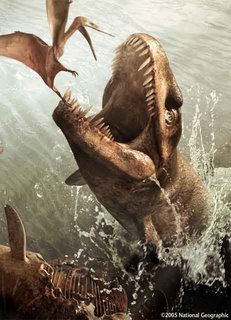
The fossil remains of a new species of marine dinosaur has been uncovered.
Gee, that's really imaginative calling a big dinosaur with sharp teeth 'Godzilla'. What will they think of next?
13ft isn't that big really. There are plenty of horror crocs swimming around in the NT.

The fossil remains of a new species of marine dinosaur has been uncovered.
The fossilised remains of a crocodile that ruled the oceans 140 million years ago have been discovered in Patagonia.
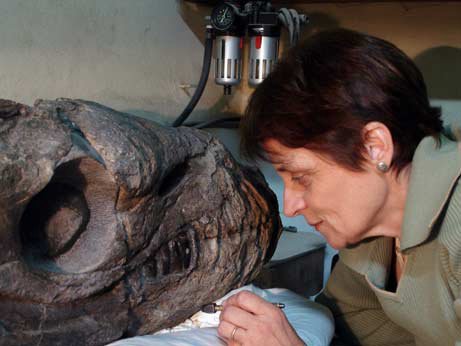
Scientists have nicknamed the creature Godzilla, because of its dinosaur-like snout and jagged teeth.
The US-Argentine team of researchers believes the animal was a ferocious predator, feeding on other marine reptiles and large sea creatures.
The species is formally known as Dakosaurus andiniensis and has been unveiled in the journal Science.
Unlike modern crocodiles, it lived entirely in the water, and had fins instead of legs. It measured 4m (13ft) from nose to tail and its jaws alone were a third of a metre (foot-and-a-half) long.
Crocodiles evolved during the late Permian and became widespread during the Cretaceous (146 to 65 million years ago).
Other marine crocodiles alive then had long, slim snouts and needle-like teeth, which they used to catch small fish and molluscs. But this creature had a dinosaur-like snout and large, serrated teeth.
"These sorts of features are also present in carnivorous dinosaurs like Tyrannosaurus rex," said co-researcher Diego Pol, of Ohio State University in Columbus, US.
"It shows a really unexpected morphology that nobody thought could be present in a marine crocodile."


Gee, that's really imaginative calling a big dinosaur with sharp teeth 'Godzilla'. What will they think of next?
13ft isn't that big really. There are plenty of horror crocs swimming around in the NT.
Tuesday, November 08, 2005
The News Of The Day
Venus Probe Ready To Go
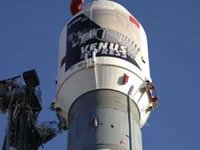
This is the Spacefreaks Weblog after all so today's leading article is about the Venus probe, which is set for launch.
Nothing special there, just letting you all know we expect to get some more data from Venus soon.
Space-Walking
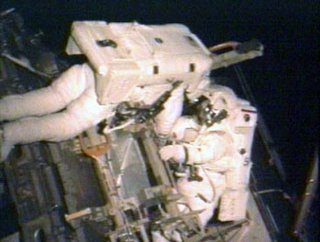
Here's a quick article about the recent spacewalks.
It's hard to figure out just how much NASA is invested in the ISS.
Nanobomb
In Delaware, they're tesing nanotubes to blast cancer cells.
Very American thinking... "Blow it up with minimal collateraal damage!"
IDiots
Kansas state Board of Education is reinstating Evolution into its science curriculum.
About bloody time.
Meanwhile, I found this at David Brin's Weblog:
Now that's insightful and funny.
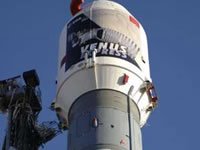
This is the Spacefreaks Weblog after all so today's leading article is about the Venus probe, which is set for launch.
The Soyuz space rocket vehicle carrying the European Space Agency's (ESA) Venus Express will launch from the Baikonur cosmodrome in Kazakhstan at 0333GMT on Wednesday.
The prove will take a 162 day journey, which will orbit the planet for 16 months studying its dense atmosphere, which is thought to be the result of an extreme greenhouse effect.
ESA scientists hope the mission will study the Venus clouds in unprecedented detail and give them valuable data about the mechanisms of climate change here on Earth.
Nothing special there, just letting you all know we expect to get some more data from Venus soon.
Space-Walking
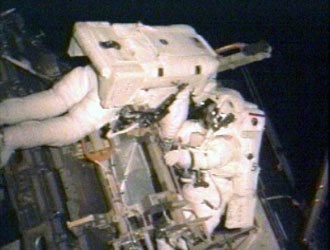
Here's a quick article about the recent spacewalks.
Expedition 12 Flight Engineer Valery Tokarev and Commander Bill McArthur spent over 5 hours outside the International Space Station, performing their first spacewalk. During their time in space, the two men installed a new video camera on the P1 truss structure and jettisoned a probe attached to the exterior of the station. The mission started an hour later than planned because of a misaligned valve in the Quest airlock that needed troubleshooting.
It's hard to figure out just how much NASA is invested in the ISS.
Nanobomb
In Delaware, they're tesing nanotubes to blast cancer cells.
At the heart of Panchapakesan's nanobombs are single-walled carbon nanotubes. While these tiny structures have been heralded as the material of the future for their astounding strength, Panchapakesan is focused on one of their other strange features: When heated by a laser at an 800-nanometer wavelength, they explode.
The exact physics of the combustion aren't well understood, but it probably works because water molecules stuck inside spaghetti-like globs of the nanotubes overheat and force the explosion to occur. Since the explosive nature of nanotubes was first discovered in 2002, some scientists have theorized that they could form a new kind of military explosive or even a rocket propellant.
Panchapakesan saw another possibility. Why not sprinkle them next to cancer cells and then blow them up like tiny improvised explosive devices? He did just that, and the method showed enormous selectivity when he focused the laser on the cells he wanted to excise.
"In other words, we can reduce the collateral damage so that we're killing only the cells we want to kill without harming healthy cells," he says.
While the explosive aspect of his research is novel, Panchapakesan isn't the first to use nanodevices to fight cancer. Naomi Halas, a Rice University engineering and chemistry professor, showed in 2003 that she could kill cancer cells by inserting nanoshells made of gold and heating them with near infrared light to the point where they die. Stanford's Hongjie Dai (.pdf) performed a similar feat with carbon nanotubes this year.
Very American thinking... "Blow it up with minimal collateraal damage!"
IDiots
Kansas state Board of Education is reinstating Evolution into its science curriculum.
TOPEKA, Kan. Nov 8, 2005 — Revisiting a topic that exposed Kansas to nationwide ridicule six years ago, the state Board of Education approved science standards for public schools Tuesday that cast doubt on the theory of evolution.
The board's 6-4 vote, expected for months, was a victory for intelligent design advocates who helped draft the standards. Intelligent design holds that the universe is so complex that it must have been created by a higher power.
Critics of the proposed language charged that it was an attempt to inject creationism into public schools in violation of the separation between church and state.
About bloody time.
Meanwhile, I found this at David Brin's Weblog:
What is fascinating about ID is the way the ID-nostalgists have been forced to adopt the memes of the enlightenment in order to push their case. They strive relentlessly to portray THEIR position as the openminded and fair one, while stodgy-elitist scientists are suppressing competition and fair debate. By trying to give themselves a patina as "science" and calling evolution "another religion" they aim to portray ID as a bold underdog. When, of course, science is still the rebel world view, even after 200 years.
Now that's insightful and funny.
The Thames On London...

...Where Cocaine Flows Freely
Well, there's so much cocaine in the Thames River water they say:
LONDON (AFP) - So much cocaine is being used in London that traces of the white powdered narcotic can be detected in the River Thames, the Sunday Telegraph newspaper said.
Citing scientific research which it had commissioned, it said an estimated two kilogrammes of cocaine, or 80,000 lines, spill into the river every day after it has passed through users' bodies and sewage treatment plants.
It extrapolated that 150,000 lines of the illegal drug are snorted in the British capital every day, or 15 times higher than the official figure given by the Home Office.
"Because of the long-term complications of cocaine use, we are looking at a healthcare time bomb," clinical toxologist John Henry was quoted as saying.
Cocaine use has been in the headlines in Britain after fuzzy images of supermodel Kate Moss apparently enjoying some lines in a London recording studio were published in a tabloid newspaper.
Next thing you know, a cunning Baldrick type is going to suggest filtering it out of the river water for profit.
Sunday, November 06, 2005
Putting the 'ID' Into 'Idiot'

Or For That Matter, 'Stupid"
The 21st century version of the monkeytrial is drawing to a close.
POf course we find this moronic op-ed piece from the shallow parts of he gene pool known as Indianapolis, USA. It's sidesplittingly funny and earnest in its desire to stay, religious, ignorant of the facts and wilfully stupid.
Proponents of evolution may object to the General Assembly wading into this subject. Science education ought to be left to scientists, under their reasoning. But the experts have a big disagreement, and the root of the matter lies not so much in science but in bigger questions.
Meanwhile, Republicans in the House are considering whether to require teaching of both sides of the issue. Several other state legislatures are tackling the subject as well, and U.S. Sen. Rick Santorum, R-Pa., has put the Senate on record in favor of teaching both sides.
In Indiana, the issue may not fall along strictly party lines. State Rep. Peggy Welch, D-Bloomington, is sympathetic to teaching both sides. "There is plenty of evidence that evolution is a theory, and yet it is taught as fact," she said. "Why is there only one way of thinking taught? Intelligent design is providing information to our children about a lot of different possibilities."
If science teachers don't want interference from state legislatures or other non-scientists, they will have to stick with science. When they insist on exclusively teaching that we evolved from lower forms of life over billions of years, they have wandered outside their realm of expertise.
*Gasp*
I couldn't stop laughing at the last bit. Isn't it exactly the realm of science's expertise to point out that "we evolved from lower forms of life over billions of years"? So in saying that it's not, the nitwit is saying:
1) he doesn't want to know.
2) he doesn't want it explained, because he probably won't understand.
3) he'd like to keep with the fairy tale bed-time stories instead of real hard scientific facts
4) he wants everybody else's kids to grow up wifully ignorant and stupid as he is.
The scary part is, that this kind of sentiment is voting in George W. Bush; and GWB is the head of state to the most powerful state on this planet. We live in sad times.
The shame is you can't send these feeble minds back to school because it'd be a waste of money; but heck, they still get a vote. Aah, the beauty of Democracy.
Friday, November 04, 2005
Need Another Shuttle Again
Bring On Th Next Gen
NASA are looking to replace the old shuttle fleet and at the same time try to finish the ISS.

I guess the old one really isn't working for them any more.
Hayabusa Closes In On Asteroid
JAXA have a craft approaching an asteroid.
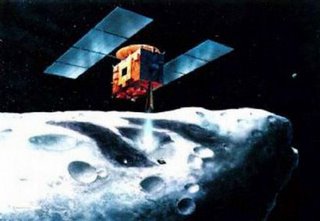
So soon we might get to see what it looks like on an asteroid.
Reality Czech?

Czechs are going to get to watch Gorillas in a 'reality show.
The question is, do the other 'loser' Gorillas get paid melons at all? I guess they don't have actors' unions protecting their livelihoods.
A Long Time Coming
They (as in some scientists) found these fossils in 'sexual congress'
It's not as exciting as two dinosaurs going at it hammer and tongs.
NASA are looking to replace the old shuttle fleet and at the same time try to finish the ISS.
"NASA cannot afford to do everything on its plate today," he told the House Science Committee. Funding priorities required the agency to cancel several programs that "we either did not need or did not need right now," Griffin said.
For example, it seemed like putting the cart before the horse to continue life science studies about how people respond to being in space before the agency was sure it could put people back in space, he said.
In addition to life sciences, another affected program is nuclear systems technology, Griffin said.
That program is designed to provide power to an outpost planned for the surface of the moon. But that won't be needed until after 2018, so the work is currently being deferred, he said.
The agency has adopted a "go-as-you-can-pay" approach, Griffin said.
That focus on two primary areas should serve as a warning of potential cuts for the rest of NASA, Rep. Bart Gordon (news, bio, voting record), D-Tenn., commented.
Committee Chairman Sherwood Boehlert, R-N.Y., expressed support for Griffin but added that "NASA cannot use aeronautics and science as a piggy bank to fund human space flight."
Griffin said the next flight of the space shuttle is still planned for spring, adding that while the agency was surprised by problems with the foam insulation on the last flight, a lot has been learned from that.
NASA has been developing the new crew exploration vehicle, which is intended to fly to the moon but also can replace the space shuttle when it goes out of service.
Delaying that work could result in the United States being out of the manned spaceflight business for a few years after the shuttle is retired, at the same time other nations are increasing their space programs, Griffin said.
In addition, he said, NASA is encouraging private industry to submit proposals to carry cargo and crew to the space station.
I guess the old one really isn't working for them any more.
Hayabusa Closes In On Asteroid
JAXA have a craft approaching an asteroid.

Now just a few miles distant from the space rock, the spacecraft is poised for an historic attempt to collect and return a specimen to Earth from such an object. Imagery from Hayabusa is being used by Japanese scientists to target potential touchdown sites on the rocky world.
Hayabusa was rocketed into space from Japan's Kagoshima Space Center on May 9, 2003 and is a project of that country's Institute of Space and Astronautical Science (ISAS), a space science research division arm of the Japan Aerospace Exploration Agency (JAXA). Hayabusa arrived at its exploration target, near Earth asteroid Itokawa, on September 12, propelled there via ion engines and an Earth swing-by to put the probe on a heading toward Itokawa.
JAXA space engineers are readying Hayabusa for a November 4 "rehearsal descent" - a practice run that is expected to verify procedures for a first touchdown of the probe on the asteroid on November 12. A second touchdown of the craft is slated for November 25.
Ground controllers are carefully monitoring onboard fuel reserves to attempt the historic landings.
In addition, loss of two of Hayabusa's reaction wheels - needed to help delicately maneuver the spacecraft - spurred new control strategies to be devised by ground control engineers.
Along with sampling duties, Hayabusa will dispatch a tiny robot onto the space rock that hops about while relaying images.
The ultra-small 1.3 pound (591 grams) device lander is dubbed MINERVA - short for MIcro/Nano Experimental Robot Vehicle for Asteroid. This small hopping robot lander totes along a set of color cameras. Two of the tiny cameras can produce stereo images of the surface conditions at the landing area of MINERVA. A third camera is mounted on the robot to scan more distant regions of the asteroid's surface and can operate while the lander moves from spot to spot.
Hayabusa is a remote sensing mission, plus a lander and a sample return effort. With its cache of asteroid specimens, Hayabusa's return capsule would return to Earth in June 2007, headed for a parachute deployment and landing in the desert of Woomera, Australia.
The samples of Itokawa brought back to Earth by Hayabusa could provide the first direct evidence of the link between asteroids and meteorites, Japanese space scientists point out.
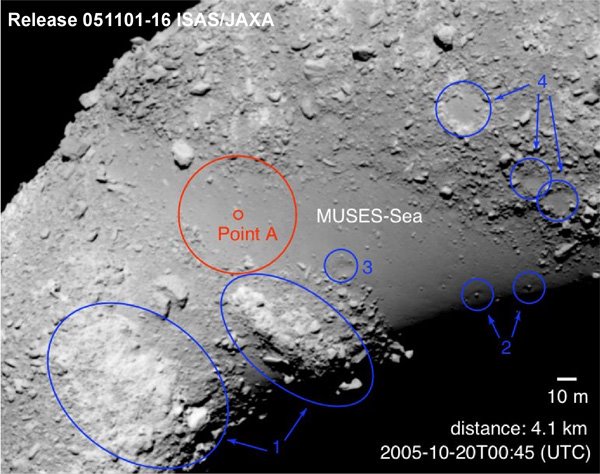
So soon we might get to see what it looks like on an asteroid.
Reality Czech?
Czechs are going to get to watch Gorillas in a 'reality show.
For the next two months, starting on November 7, live webcasts of one male gorilla, two females and a young gorilla at the Prague zoo will be shown on a public radio Internet site with scenes from the daily life of the apes also screened on public television.
"It is a meaningful alternative to "people" reality shows," the zoo said in a statement. Humans would also be given an insight into great ape behavior, added zoo spokesman Vit Kahle on Wednesday.
Viewers will be asked to vote for their favourite gorilla with money raised from text messages directed towards an existing zoo project to help save gorillas in their natural environment, most likely Cameroon.
The prize for the most liked gorilla will be 12 melons, a pun on the Czech slang substitution of melons for zeros when talking about large sums of cash.
The question is, do the other 'loser' Gorillas get paid melons at all? I guess they don't have actors' unions protecting their livelihoods.
A Long Time Coming
They (as in some scientists) found these fossils in 'sexual congress'
The findings were published in the October edition of the Indian journal "Current Science," which said it was the first time that sexual copulation had been discovered in a fossil state, according to the Press Trust of India news agency.
But voyeurs will need a microscope to view the eternal lovers.
The fossils are tiny swarm cells, a stage in the development of the fungus myxomycetes, also known as slime molds.
The cells reproduce by "fusing," Ranjeet Kar of the Birbal Sahni Institute of Palaeobotany in Lucknow reportedly told PTI. Once the cells fuse, long, threadlike appendages known as flagella, are lost, he said.
Finding the fossils in a fused position and with their flagella shed, is evidence that the two cells were having sex, Kar said.
"The sexual organs being delicate and the time of conjugation short lived, it is indeed rare to get this stage in the fossil state," the study said.
The cells were discovered in a 30-foot deep dry well in the state of Madhya Pradesh.
It's not as exciting as two dinosaurs going at it hammer and tongs.
Tuesday, November 01, 2005
Today's Guff
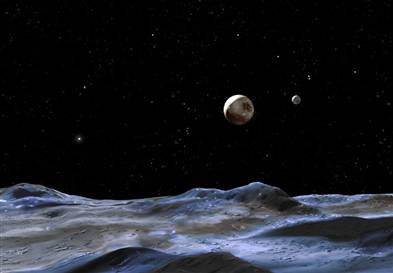
Two New Moons For Pluto?
Pluto struggles to assert its identity as a planet. Well, Hubble has seen what may be two new moons to the distant planet
"This is a whole new chapter in the Pluto story," says discovery team co-leader Alan Stern of the Southwest Research Institute in Boulder, Colo. The moons, which don't yet have formal names, also were spotted when Hubble scientists reviewed 2002 Pluto observations made by Lowell Observatory astronomer Marc Buie.
Charon, discovered in 1978, orbits much closer to Pluto at 12,024 miles and is bigger at 752 miles across. The astronomers estimate the moons range from 30 to 100 miles wide. The closer one orbits 30,000 miles from Pluto, and the more distant one is 40,000 miles out.
But all of Pluto's moons follow circular paths around its equator, on trajectories that appear to have been stable for millions, perhaps billions, of years, Stern says. That suggests all of Pluto's moons formed at the same time, perhaps after a collision between celestial bodies early in the history of the solar system, he says.
"Just to gloat a little bit for Hubble, this wasn't the first time people have looked" for more moons orbiting Pluto, says astronomer Keith Noll of the Space Telescope Science Institute in Baltimore. About 20% of the large objects in the comet-rich Kuiper Belt near Pluto show evidence of having a moon, he notes.
Among them is UB313, a planet-like body larger than Pluto that scientists also found has a "natural satellite." Similarities between Pluto's new moons and ones orbiting other Kuiper Belt objects suggest they all formed the same way, but how this happened is unclear.
Astronomers hope that further study of the new moons — which are unobservable now until February because of Pluto's position in the sky — will answer questions about the planet before 2015, when a NASA probe is scheduled to arrive there. Measuring the moons' orbits should sharpen estimates of Pluto's mass and density
"The really striking thing about these two new satellites is they appear to be in 'resonance' with Charon," says astronomer Hal Levison, another Kuiper Belt expert at the Boulder institute. For example, the more distant one orbits Pluto precisely once for every six times Charon orbits the planet. Such synchronized orbits occur elsewhere in the solar system, such as between Neptune and Pluto.
Three moons! Maybe we should have moon envy.
ESA Venus Probe To Launch On 9 Nov

It was delayed after some problems in the Russian Space Program.
The European Space Agency’s first mission to Venus will be launched on Nov. 9, Russia has announced.
According to the Russian Space Agency’s announcement, quoted by the RIA-Novosti news agency, Venus Express will be launched on Nov. 9 at 3:33 GMT from the Baikonur space center in Kazakhstan on the Russian Soyuz-Fregat rocket.
Russia has delayed the launch of the mission to Venus, originally scheduled for Oct. 26, because of an insulation problem involving the spacecraft’s launch vehicle.
The European space probe carries a set of instruments to study the atmosphere of Venus and scientists hope the mission will help provide clues about the features and the evolution of the planet. The European Space Agency says it has invested 220 million euros ($265 million) in the mission.
The spacecraft was manufactured by French company Astrium and designed to carry out the first global study of Venus’ atmosphere.
I didn't write about the launch delay because I didn't quite get around to it, but this baby will be underway shortly.
Will You Fight An Entire Demographic?

The pickie is Liz Phair, noted and notable Soccer Mom. For a weblog that often features chimps, gorillas and monkeys, I guess this is a bit of a departure.
Check this out for banal. That's 'banal', not 'banana'. :)
Two-year-old Casandra King's bedroom is stocked with products that are very different from those her mother, Julia, had when she was that age. Instead of Johnson & Johnson (NYSE:JNJ - News) Baby Oil and Vaseline (NYSE:UL - News), the Edison (N.J.) toddler gets slathered daily with petroleum-free lotions from California Baby. Her mom pays three times the price of the mass brands. And Casandra's dresser is filled with organic cotton shirts and pajamas from niche marketers such as Hanna Andersson and Mama's Earth, which can cost 50% more than clothes from Sears (NasdaqNM:SHLD - News), where Julia's mother shopped for four kids 35 years ago.
Julia King, 38, is part of an emerging class of women whom marketers call Yoga Mamas. These middle- and upper-income mothers are more style- and brand-conscious than their parents. No matter their income, they spend like lottery winners on their babies and toddlers. In the process, they're revolutionizing the baby-products market and forcing manufacturers and retailers of all sizes to adjust.
From the start, they are focused on active, fashionable, and fit pregnancies, and then on the fitness and well-being of their offspring. They tend to be more educated and have more disposable income to spend on fewer children than past generations. As a result, the $27 billion infant and preschool products business is growing more than 4% per year, faster than the overall toy, apparel, and furniture industries. "This group is influencing other moms who have money and plenty of moms who don't," says Timothy Dowd, a senior analyst at market research firm Packaged Facts. "Yoga Mama is pumping up sales across the board."
Marketers say the evidence is in the brisk sales of premium-priced products: Burt's Bees Buttermilk lotion is $8.99 and a top seller at drugstore.com; $11.50 buys a 2 oz. jar of popular California Baby Calendula Cream at Whole Foods Market (NasdaqNM:WFMI - News); Italian leather toddler shoes are $129 at Nordstrom (NYSE:JWN - News); Bugaboo strollers Yoga moms love for ergonomic design and brand cachet are $700 and up. And the appeal is well beyond Rodeo Drive and Manhattan's Upper East Side, where baby-bling-buying includes Gund brand diamond and emerald jewelry for newborns.
And apparently, this is why new baby products are designed with Mummy in mind, more than the toddler. One fears for what kind of people these toddlers will grow up into.
Subscribe to:
Posts (Atom)