Wednesday, December 20, 2006

Space Shuttle Coming Home

Discovery Readies For Re-Entry
Here's the article.
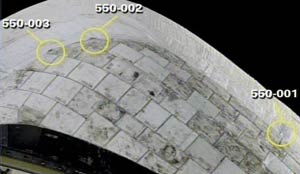
THE shuttle Discovery astronauts glided sensors over their ship's wings and nose yesterday, scouting for any heat shield problems before Friday's scheduled landing in Florida.
The survey was intended to find any damage from tiny meteoroids or space debris that may have occurred since the shuttle reached orbit on December 9. The astronauts inspected their ship once already to see if it made it through the launch without problems.

Both inspections stem from safety upgrades implemented after the 2003 Columbia disaster, which was triggered by a piece of foam insulation that fell off the shuttle's fuel tank during launch and hit the ship's wing.

Damage from the impact was so severe the shuttle broke apart as it flew through the atmosphere for landing 16 days later, killing all seven crew members.

Though Discovery showed no signs of damage from launch, NASA decided the final inspection was more important than preserving the standard two-day supply of cryogenic chemicals, which are used to make electricity, for any weather-related or technical problems that might postpone landing.

Discovery's mission had been slated to last 12 days, which would have left enough supplies for the two-day reserve, but was extended a day to retract a jammed solar wing panel on the International Space Station.

Discovery departed the space station on Tuesday after rewiring the orbiting outpost and adding a truss segment to its backbone.

With just one day's supply of liquid oxygen and liquid hydrogen in the tanks, Discovery is poised to return to Earth on Friday. NASA mobilized all three shuttle landing sites, including its rarely used New Mexico landing strip, to improve the chances of a homecoming on Friday.
Godspeed Discovery.

JAXA

HII-A Rocket

The HII-A Rockt Flight 11 was launched today carrying a payload of 5.8tonnes. It had 4 SRBA strap on booster rockets and cleared the 70m tower in twice the normal speed of 2seconds.
宇宙航空研究開発機構種子島宇宙センター(南種町)から18日に打ち上げられたH2Aロケット11号機。固体ロケットブースター(SRBA)を初めて4本装着した機体は、地鳴りのようなごう音と太い噴射雲を残して、冬の空に消えた。迫力を増した打ち上げの様子に、見学者たちは息をのんだ。

 H2Aは、打ち上げ時の加速に用いるSRBAと、固体補助ロケットを組み合わせ、打ち上げ能力を4段階で調整する。11号機が載せた技術試験衛星「きく8号」は、国内最重量の約5.8トン。SRBAを通常の2本から初めて4本に増やし、「最強型」にした。

 同機構によると、発射直後の初速度は通常の2倍。射場にある高さ約70メートルの避雷鉄塔を越える時間が6秒から3秒に短縮された。噴射の音や光量も増したという。

 通常はゆっくりと浮き上がるH2A。この日は、まるで空からつり上げられるようにスムーズに上昇した。打ち上げを見慣れた同機構の広報班員たちも「今回は違った」と興奮気味に話した。
The payload was 'Kiku 8', a communication satellite with two 19x17m antennae and should hit stationary orbit in 2weeks.


宇宙航空研究開発機構は18日午後3時32分、技術試験衛星「きく8号」を、種子島宇宙センター(鹿児島県)から国産主力ロケットH2Aの11号機で打ち上げた。

 きく8号はテニスコート一面ほどの縦19メートル、横17メートルという世界最大級の大型通信アンテナを2枚搭載しており、打ち上げ時の重さは日本で過去最大の約5.8トン。畳んであるアンテナを打ち上げ約1週間後にバネの力で広げ、その約2週間後に静止軌道に入る計画だ。災害時の状況把握などに役立てるため、地上の小型携帯端末と直接通信する実験などに取り組む。
More details can be found here.
Another successful launch by JAXA.

Tuesday, December 12, 2006

Shuttle Flight


The Space Shuttle is aloft once more and I've been busy following events in sport. So apologies.
Astronauts on board the space shuttle Discovery will attach an extension to the orbiting International Space Station during a spacewalk today, in what is said to be one of the most difficult tasks ever carried out in space.

Discovery, which docked last night local time, will remain at the ISS for eight days, during which its crew will perform three spacewalks.

In the first, Christer Fuglesang, a Stockholm physicist and the first Swede in space, along with Robert Curbeam, the mission specialist, will attach a two-tonne, $11 million cube-shaped addition to the space station.

During the subsequent spacewalks astronauts will rewire the US-made portion of the space station, which will involve cutting off the power and activating extra solar panels to double the current electrical output.

The National Aeronautics and Space Administration says it will be the trickiest manoeuvre ever carried out in space.

Meantime, Nasa was deciding whether there was any need for further inspection of the shuttle’s left wing after a sensor detected a "very low impact" less than three hours after docking.

Two astronauts had used a robotic arm to examine the wing leading edge. But John Shannon, chairman of the mission management team, said the impact was considered to be of concern but the agency wanted to play if safe.

"It looks like something happened," said Mr Shannon, adding that the wing looked fine during a focused inspection performed Sunday.
Since then they've had a spacewalk to confirm the shuttle was okay.
Two astronauts climbed out of a hatch on the international space station Tuesday, starting a difficult six-hour spacewalk during which they will guide and bolt into place a new 2-ton addition to the orbiting lab.

U.S. astronaut Robert Curbeam, a veteran spacewalker, and the European Space Agency's Christer Fuglesang, who is making his first spacewalk, stepped outside at 3:31 p.m. EST as the space station flew 220 miles over central Europe.

"I've got my head out the hatch," Curbeam radioed commander Mark Polansky.

Polansky, who flew on a 2001 shuttle mission during which Curbeam took three spacewalks, responded, "OK, Buddy. Welcome back. It has been a long time."

Right after the spacewalk began, a hand control unit was dislodged on Curbeam's backpack attachment used in case he becomes untethered, but the problem was quickly fixed. Spacewalkers are tethered at all times.
So all is well.

Monday, December 04, 2006

Back to the Moon

Budget Considerations
Here's an article about the projected budget of the missions back to the moon.
Some government auditors worry that NASA could come up billions of dollars short of the money needed to return U.S. astronauts to the moon.

However, the space agency says it already is closing that long-term funding gap by making money-saving design changes to its proposed Orion spaceships and the Ares rockets that will launch them.

Those and other changes made since NASA first estimated the cost of going back to the moon are making people inside the agency more confident they can complete the project on time and within its budget. Today, NASA plans to reveal details about what astronauts will do on the moon and how they will do it.

However, congressional auditors fear that NASA is repeating mistakes made in development of the space shuttle, International Space Station and several failed shuttle replacement programs and could be on track to run up billions of dollars worth of cost overruns. The Government Accountability Office is asking NASA to slow its investment of taxpayer dollars in the project.

Scott "Doc" Horowitz, NASA's man in charge of the moon-landing project, said the agency is pressing ahead because it has solid engineering and cost information for a project that involves development of spaceships and rockets using designs and components with a long track record of proven success.

NASA is keenly aware that failure to bring the project to fruition safely, on time and within budget could threaten the agency's future, he said.

"NASA needs to improve on its credibility," Horowitz said in a wide-ranging interview with FLORIDA TODAY on the challenges facing the moon-landing project. "It's been a while since we've been able to execute a program like this. The best way to improve credibility is to execute. We need to prove it."
Ah, the normal pressures of project management!

Sunday, December 03, 2006

The World Is Not Enough

Stephen Hawking Says...


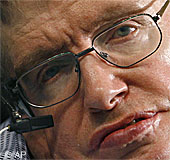
Stephen Hawking has been making this stance in public for some months now. At a time where our public interest in space might be on the wane, he sets us the bar.
Stephen Hawking, one of the world's most venerated scientific minds, has said abandoning terra firma is inevitable since a nuclear war or some sort of asteroid collision could at some point wipe Earth off the chart as a viable place to live.

"The long-term survival of the human race is at risk as long as it is confined to a single planet," the usually publicity-shy Hawking told BBC radio.

Incidentally, if humans have any hope of reaching hospitable planets in other solar systems using the rocket technology that took us to the moon, it'll take, oh, around 50,000 years.

But the wheelchair-bound Cambridge University professor has a way around that: propulsion systems, a la Star Trek. "Science fiction has developed the idea of warp drive, which takes you instantly to your destination," he said.

Though it's scientifically impossible for anything to travel faster than the speed of light, Hawking believes people could eventually go just under that speed using a process known as called matter-antimatter annihilation.

Star Trek aficionados will be well aware that ships such as the Enterprise are propelled using antimatter, a process which is still unworkable in reality though has for years been investigated by NASA's Marshall Space Flight Center.

Were the method indeed possible, travelers could conceivably reach the closest star in around six years.

It might be decades before today's would-be space travelers get to visit such planets, though Hawking, for one, is still keen to visit the final frontier. "My next goal is to go into space," he said. "Maybe Richard Branson will help me."
It's no laughing matter, it's not science fiction, it's Stephen Hawking saying his piece. The future of humanity lies in space.